I have painted a lot of walls. More than I should admit.
And I can tell you the number one question people ask me before they crack open a can is this: black or white?
Funny thing is, most of them already know the answer. They just want permission.
So here’s your permission. But also, here’s the truth. Because I’ve seen people ruin perfectly good rooms with both colors, and I’ve seen both colors absolutely transform a space.
The difference isn’t the color. It’s everything else.
Look, Black Is Not for Everyone
I’ll say it. Some of you should not paint anything black.
If your living room gets about twelve minutes of sunlight a day and you’re already fighting the urge to nap every time you sit on the couch, black paint will turn your home into a sensory deprivation tank. I don’t care what the moody Pinterest boards told you.
But if you have a room with good light and decent bones? Black is the most underrated thing you can do to a wall.
What Black Paint Actually Does to a Room
It pulls you in. That’s the best way I can describe it.
A black accent wall behind a bed makes the room feel like a boutique hotel you probably can’t afford. Black wainscoting in a dining room? Suddenly you’re in a steakhouse that takes reservations three weeks out.
And wood tones? They look ten times richer against black. A cheap oak table looks expensive when there’s black behind it. That’s just how it works.
Designers are on this train too. Houzz’s 2026 trend report found that 39% of renovating homeowners are choosing black for exterior trim. That’s up 17 points from 2024.
So it’s not a phase. It’s a shift.
The Downside of Black Paint
Maintenance. Black shows everything.
Every scuff. Every fingerprint. Every bit of dust you didn’t notice. If you have kids or a dog that sheds, you’re signing up for a hobby you didn’t ask for.
Touch-up paint should just live in your closet now.
Black Paint for Kitchen Cabinets
For kitchen cabinets, though, I’d go black without hesitation.
We’re finally over the all-white kitchen era. It was sterile. It was boring. And it made every kitchen look like a rental.
Sherwin-Williams Tricorn Black is the safe bet. It’s a true black with no weird undertones. Benjamin Moore Wrought Iron is softer and warmer. Less aggressive. Either one will make your cabinets look like you spent more than you did.
White Is the Safe Choice, But Not the Boring One
You know what white paint does? It forgives you.
Bad furniture? White walls make it pass. Weird layout? White walls make it disappear. It reflects light, makes rooms feel bigger, and doesn’t fight with anything you own.
It’s also what buyers want. I don’t care how trendy dark interiors get. When a house goes on the market, white sells.
Every realtor knows this. Every stager knows this. It’s not exciting, but it’s smart.
The Problem With “White” Paint
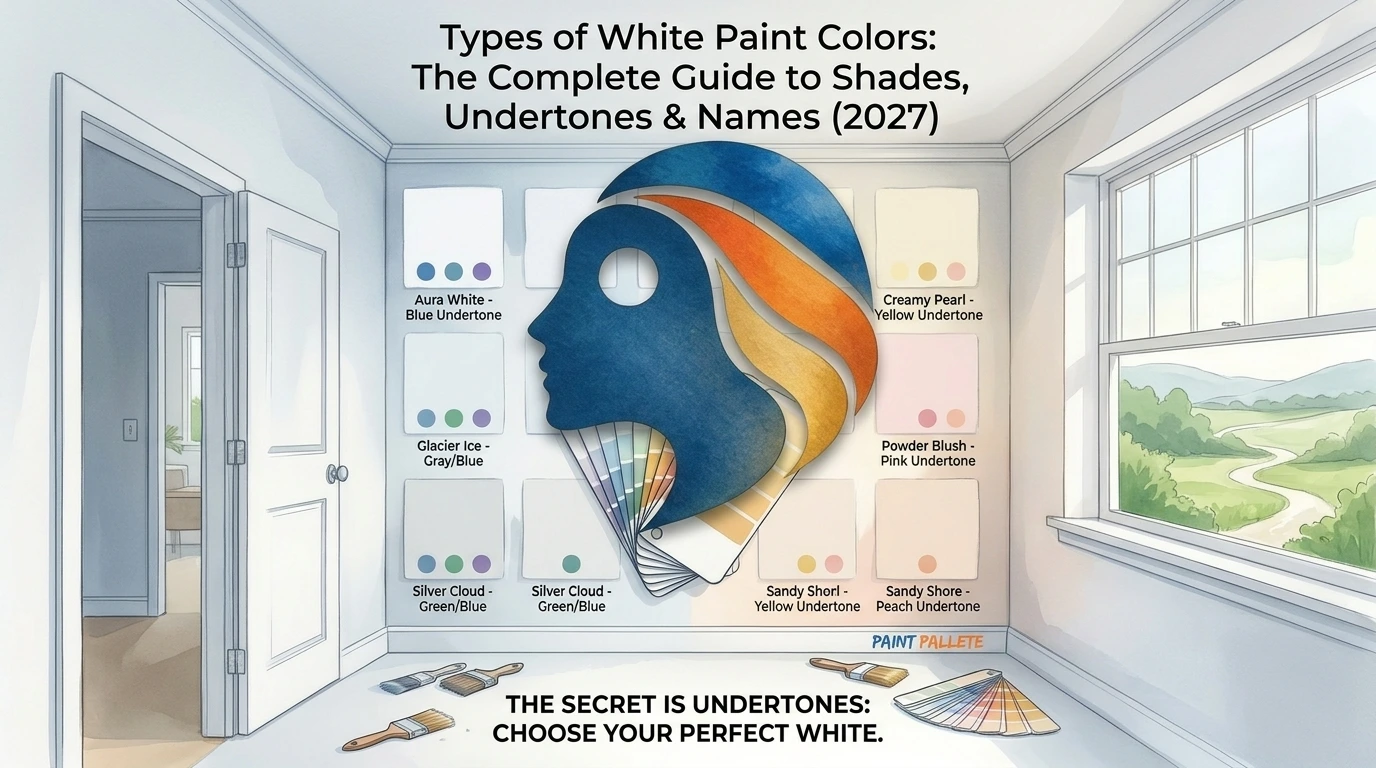
Here’s the trick. “White” is a lie. There’s no such thing as just white paint.
Chantilly Lace is sharp and modern. Basically the color of a fresh piece of copy paper. White Dove is softer and warmer. The kind of white that makes you want to curl up with a book. Simply White is the middle child that gets along with everyone.
Pick the wrong one and your walls will look gray. Or worse, yellow.
Even Pantone jumped on the white train this year with Cloud Dancer. It’s basically a whisper of a white. Soft. Airy. Calm.
That tells you something about where American homes are heading. People want light. They want to breathe.
White Paint Shows Everything Too
White shows scuffs at the bottom of stairwells. Fingerprints around light switches. That one crayon mark your kid swore they didn’t make.
White is a commitment. Just a different kind.
Here’s How You Actually Decide
Stop trying to pick a favorite. You don’t need one.
My rule is simple: contrast beats commitment.
White walls with black trim. Black cabinets with white counters. Black doors against white hallways. That tension is what makes a room feel designed instead of just painted.
Pick one as the background and one as the punchline.
Black and White Paint for Living Rooms
Living rooms and dining rooms can handle either.
Go white on the walls and black on the trim. Done. Or flip it if the room has tall ceilings and good windows. Black walls with white trim look like something out of Architectural Digest. But you need the space for it.
Black and White Paint for Kitchens
Kitchens are where people panic. You don’t have to.
Black lowers with white uppers. Or a black island with a white perimeter. You get the drama without the dungeon.
Black and White Paint for Bedrooms
Bedrooms are where black actually wins.
A matte black wall behind the bed is the closest thing to a sleep aid you can buy at a paint store. Just don’t use true black. Go for a charcoal or something with brown in it.
Benjamin Moore Black Panther is warm. It grounds the room instead of swallowing it.
Black Paint for Exteriors
Be careful with exteriors.
A black house can look incredible in the right neighborhood. It can also make your house look like the villain’s mansion on the block.
If you’re unsure, paint the front door black and leave the siding alone. You’ll get the look without the risk.
The Part That Actually Ruins Projects
It’s not the color. It’s the prep.
I’ve seen people spend three hundred dollars on paint and skip the primer. Then they wonder why the black looks blotchy and the white looks gray.
Always Use Primer
Primer is not optional. Period.
Dark over light needs primer. Light over dark absolutely needs primer. Cabinets need bonding primer or your paint will peel off in sheets the first time someone wipes them down with a damp rag.
Choose the Right Finish
Matte black hides imperfections and looks more expensive. Glossy black reflects everything and shows every roller mark you thought you sanded out. White is the opposite. Semi-gloss white on trim is standard because you can scrub it. Flat white on ceilings hides the drywall work you didn’t do well.
Test Your Samples
Test your samples on the actual wall. At different times of day.
That little chip you picked up at the store under fluorescent lights will look completely different in your living room at 5 p.m. I’ve watched people buy five gallons of paint based on a two-inch square. Don’t be that person.
So Which One?
Honestly? You already know.
If you want a room that feels calm, bright, and easy to live in, you want white. If you want a room that feels dramatic, moody, and intentional, you want black.
And if you want a room that looks like someone with actual taste lives there, you want both.
The only real mistake is picking a color because someone on the internet said it was trendy and then living with it for five years.
Paint is cheap. Regret is expensive. Sample first. Commit later.
Now go pick up a brush. Your walls are waiting.
Frequently Asked Questions
Is black paint good for small rooms?
Only if the room gets real light. A matte black accent wall can add depth without closing in the space. But painting every wall black in a dark, small room is a mistake. You’ll feel it immediately.
Does white paint make a room look bigger?
Yeah, usually. White bounces light around and pushes the walls back visually. But cool whites can feel cold. Go warm or neutral if you want the space to feel livable, not clinical.
What’s the best black paint for kitchen cabinets?
Sherwin-Williams Tricorn Black is the safest true black. Benjamin Moore Wrought Iron is warmer and softer. Both hold up well if you prime properly.
Can I use black paint on exterior trim?
Yes, and you should consider it. Black exterior trim is one of the biggest trends right now and it looks sharp against light siding. Just don’t paint the whole house black unless you’re sure about it.
Do I need primer for black or white paint? Always. No exceptions. Primer blocks stains, helps adhesion, and saves you from needing four coats of topcoat. Skipping it is the number one reason DIY paint jobs look amateur.
Ready to stop guessing and start painting? Head to paintpallete.com for the full range of black and white paints, primers, and finishes. Everything you need to get it right the first time.